Listening for the Alien Heartbeat

The first job when writing a post is to work out for who you are writing it.  There is no doubt here:  it is for these two, wide-eyed and beautiful, despite growing up in a generation of vicious civil war in which both miserable sides used children as soldiers on the front line.

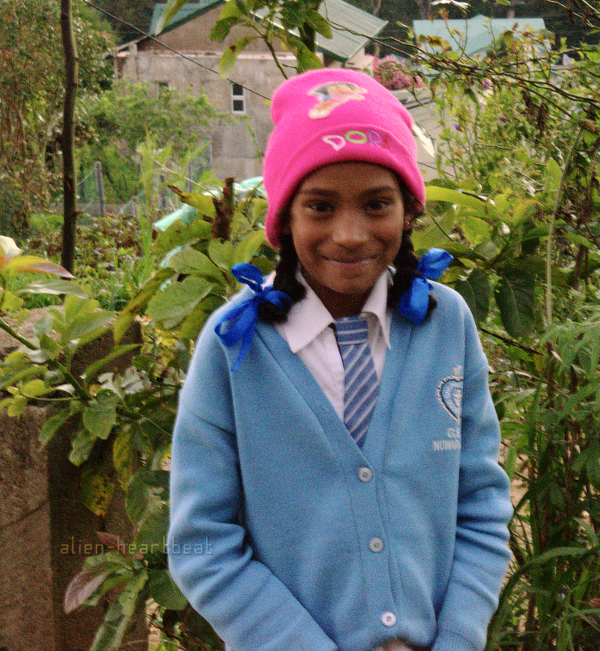
Nuwara Eliya - Boy and Girl in Doorwayand for this girl in the Dora the Explorer cap (grainy because it was late and dark) living in one of the poorer areas of Sri Lanka, and in a country and age when child labor is only now being dealt with.  Twenty years ago Dora the Explorer was another planet.

Nuwara Eliya - Schoolgirl in Dora the Explorer Hatand for this wild djinn bringing me good luck from a fruit tree, a reminder of the orphaned survivors of the 2004 Tsunami and the exploitation and violence they live under:

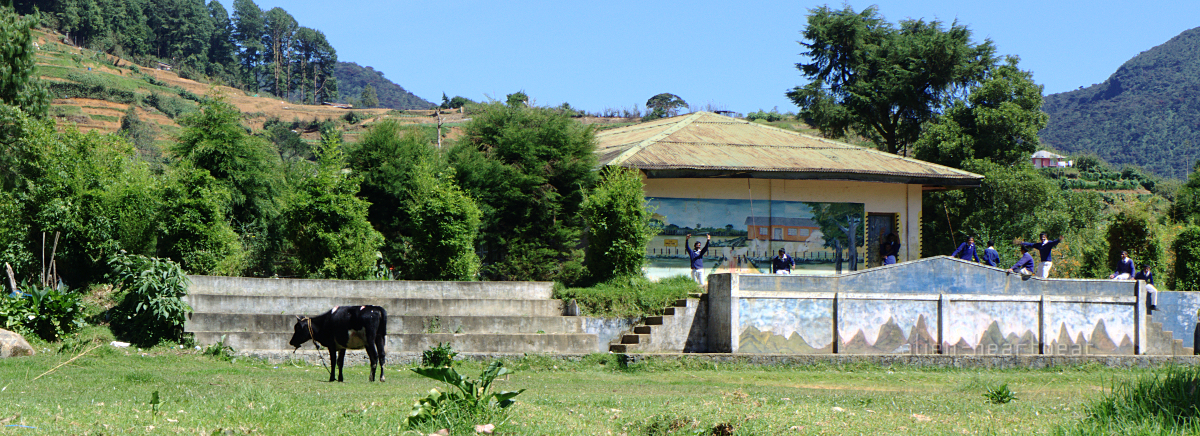
Nuwara Eliya - Good Luck Djinn in TreeThis is a new generation of Sri Lankan children, with new lives and new opportunities, even if they still share the grounds with cows:

Shantipura - Schoolboys and CowI saw them rushing past on many railway stations, crossings and roads.  Serious faces, serious about their future:

Sri Lanka - School Kids Rushing along Railway PlatformThey know they are the lucky ones.


12 Comments

In some places mountain scenery is stunted bushes and scree, and what houses exist are, like their occupants, precariously attached to life.  Not here.

Today I walk up to Shantipura, the highest village in Sri Lanka, sitting on “One Tree Mountain”, named by a monk with an overly literal sense of the oneness of all things.

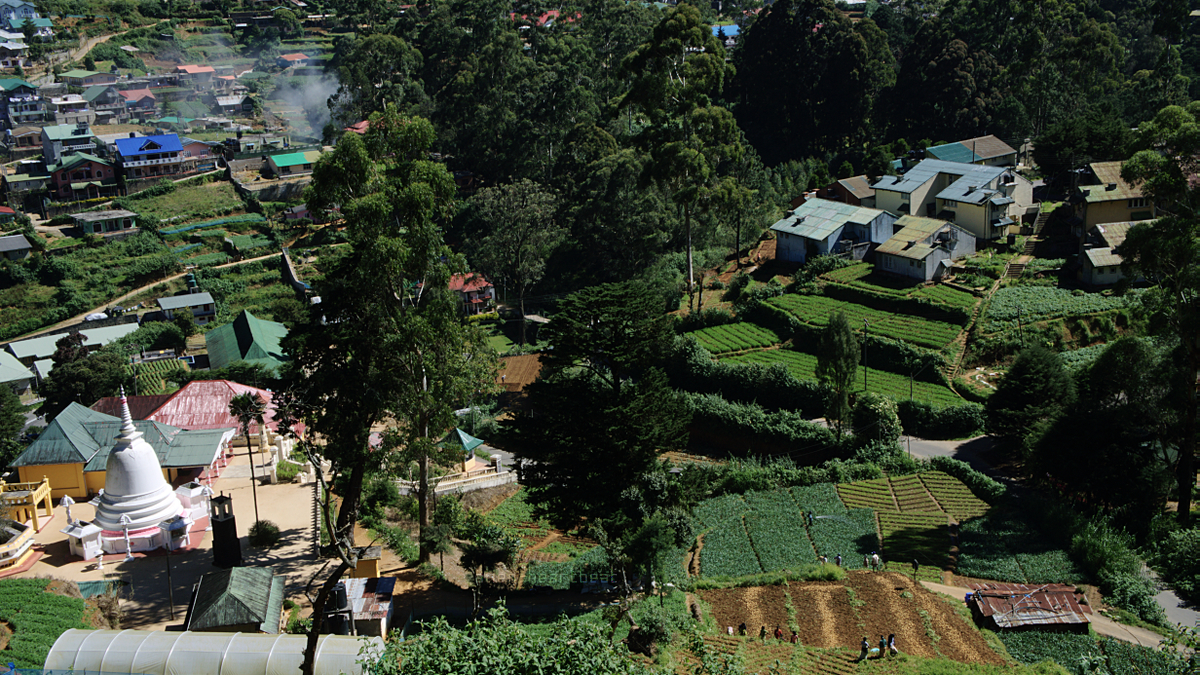
I walk past a white stupa  under a pure blue sky.   Amid a mass of green, people are digging, planting, watering vegetable plots.

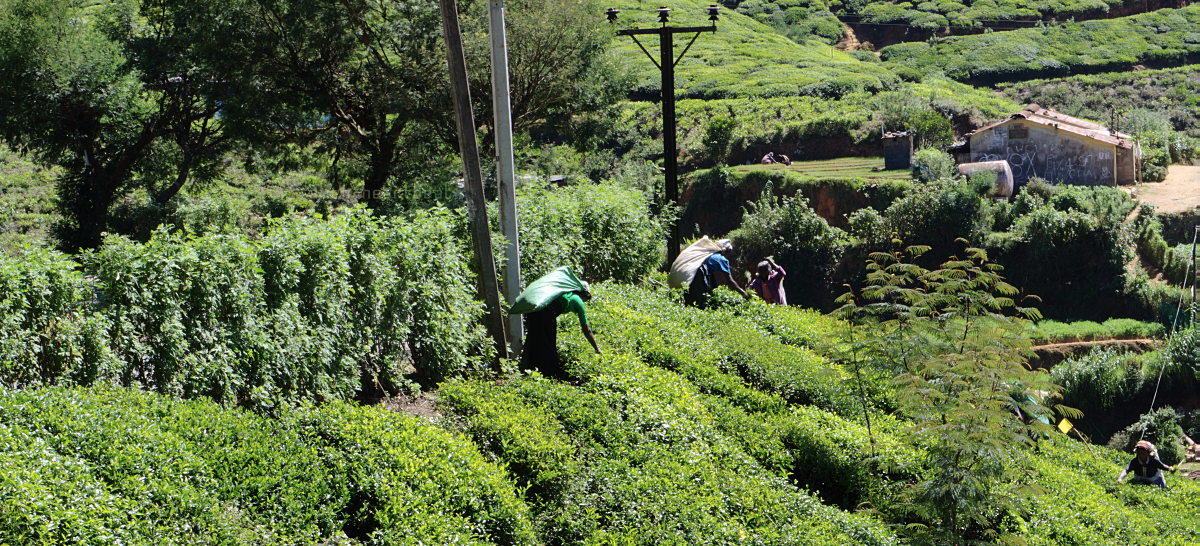
Nuwara Eliya - View of Stupa from aboveStrong women pick tea, their bags held by a band around their heads.  They laugh at me and get back to work.  Likely they are evaluating and then dismissing me as husband material.

Shantipura - tea pickersThe top of the mountain here seems as fertile as the valley.  Given over to houses and market gardens growing a dozen different types of vegetable.

Shantipura - market gardensAs I walk around the top I feel Sri Lankans don’t just smile, they laugh hello.  Since the end of socialism and civil war, people here grow stuff and laugh.  So different from Armenians, who, unable to see their way out from under the oligarchs, are often grim and gray.

I get hungry but not much cooked food here.  I buy some sugary bread from this woman, who has a nice shop and seems content enough with her shop and with life.

Shantipura - woman in small shopI liked the look of this old woman, sitting Buddha-like on the step.  She smiled at me so I took her picture.    Later I realized she really was from the old Sri Lanka, and must have been smiling because she heard rather than saw me.  When I examined the full resolution picture, I realized she was blind.

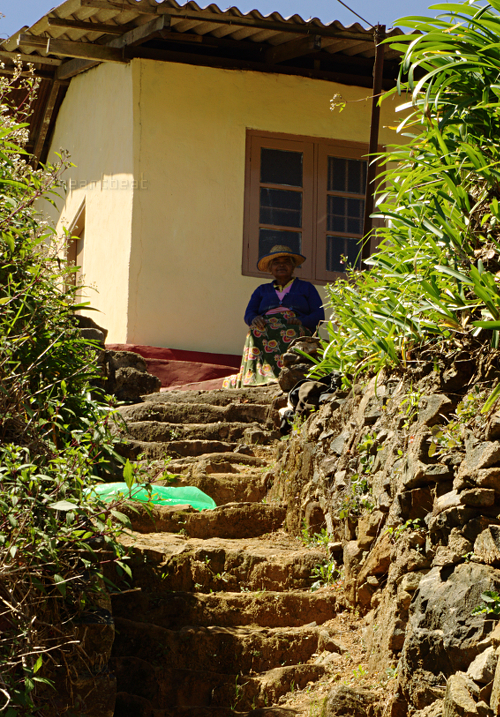
Shantipura - blind woman on stepsBy late evening I get back down to the town.  A chaos of Hindi songs, hand-cooked food, cheap goods.  Shops beckoning, touts touting.  Here it is the primary colors of plenty.

Nuwara Eliya - Fertile LandAgain so different to Armenia, and its quiet gray of scarcity.  It is only now that I realize what it was that struck me most about Armenia – the lack of color.  And once again I realize you only really understand what you saw when you no longer see it.

(events 17/Jan/2013)


10 Comments

When I first went to Sri Lanka – by 2 boats from Rameswaram in the south of India – it was in the throes of a miserable socialism[1 ].    Mean politicians ruled a people unable to see past the struggle for their next meal.  Even the land seemed dusty and intractable.  But now, with the return of a market economy, the land is so lush it is startling.

Sri Lanka, Nuwara Eliya - white house beside road - lush landOne of the local crops is potatoes, and this man trades in potatoes.  He was a decent man, gently spoken and well educated.  Why would I mention this?  Because under socialism the Sri Lankans I met were either the fat-witted privileged, or the hustling down-trodden.

Sri Lanka,  Nuwara Eliya - Potato Trader

Now this man is a shop-keeper of the old school.  He sells ‘paan’, that stimulating, disgusting, somewhat lethal mixture of leaves, tobacco and spices that people on the subcontinent chew.  I asked him if it was good for you.  He told one of the men in the shop to show me his mouth – a straggle of black, rotted teeth.  Did he use it?  “Of course not”.

Sri Lanka,  Nuwara Eliya - Paan SellerHis is a simple paan.  The ingredients pictured below I guess are betel leaf, betel nut, tobacco and lime stone powder paste[2 ].  Though if anyone has a sufficiently purple mouth to correct me, feel free.

Sri Lanka,  Nuwara Eliya, Paan Seller, A simple paanMargins for traders are no doubt small, and these men work hard and late.

Sri Lanka,  Nuwara Eliya - Evening TradersBut the end result is markets full of goods that most can afford:

Sri Lanka,  Nuwara Eliya - Shops, Formal and Informal Marketsand an economy in which even the less favored can still survive[3 ].

Sri Lanka,  Nuwara Eliya - Muslim shop, Tamil food seller


Notes

1.  Even the Trotskyites got a seat at the table.  These were guys who never got invited anywhere.

2   He did tell me what they were but my brain ran out of room for new stuff 11 years ago.

3.  Kindly note:  there is nothing in this practical endorsement of market economies that suggests there aren’t some CEOs who ought to be stuffed into a cannon and shot off the planet.  After getting an ‘atomic wedgie’.


11 Comments

From Kandy I take the train to Nuwara Eliya (‘City of Light’), an old hill station and a place famous for its tea.  Train, men and beasts shared the tracks, in a show of mutual respect and tolerance.

Train to Nuwara Eliya - Conductor with FlagAfter Armenia, the land beside the tracks is so fertile and so green, the people so lucky, it hurts my eyes.

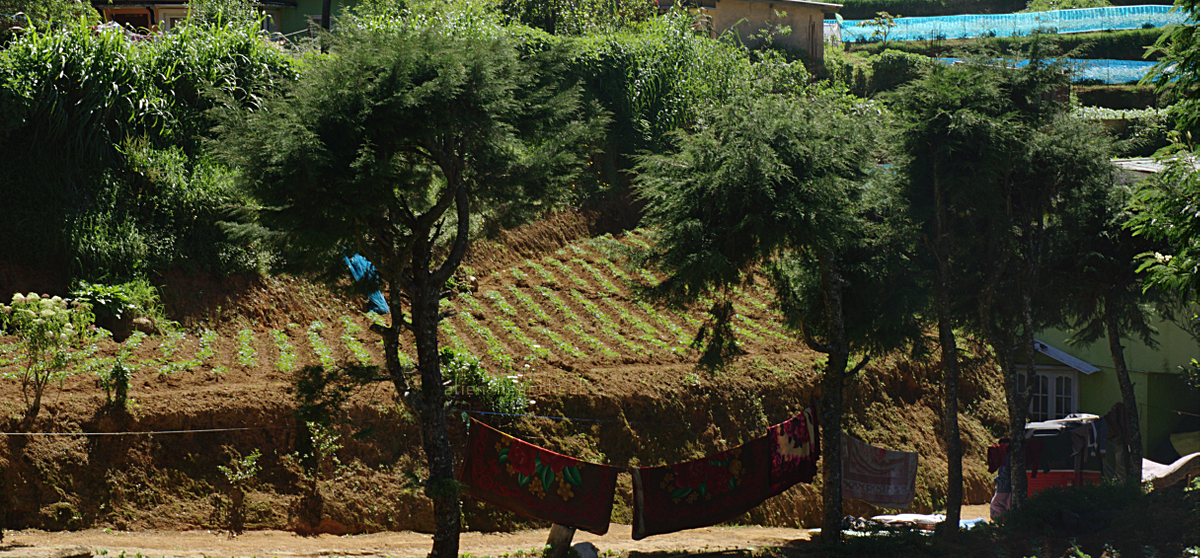
Train to Nuwara Eliya - Girl with UmbrellaI arrive at the hill station in the late evening.  Smoke rising from a prosperous buddhist town, steps of vegetables leading up the nearby mountain, and the last of the sun at the top.

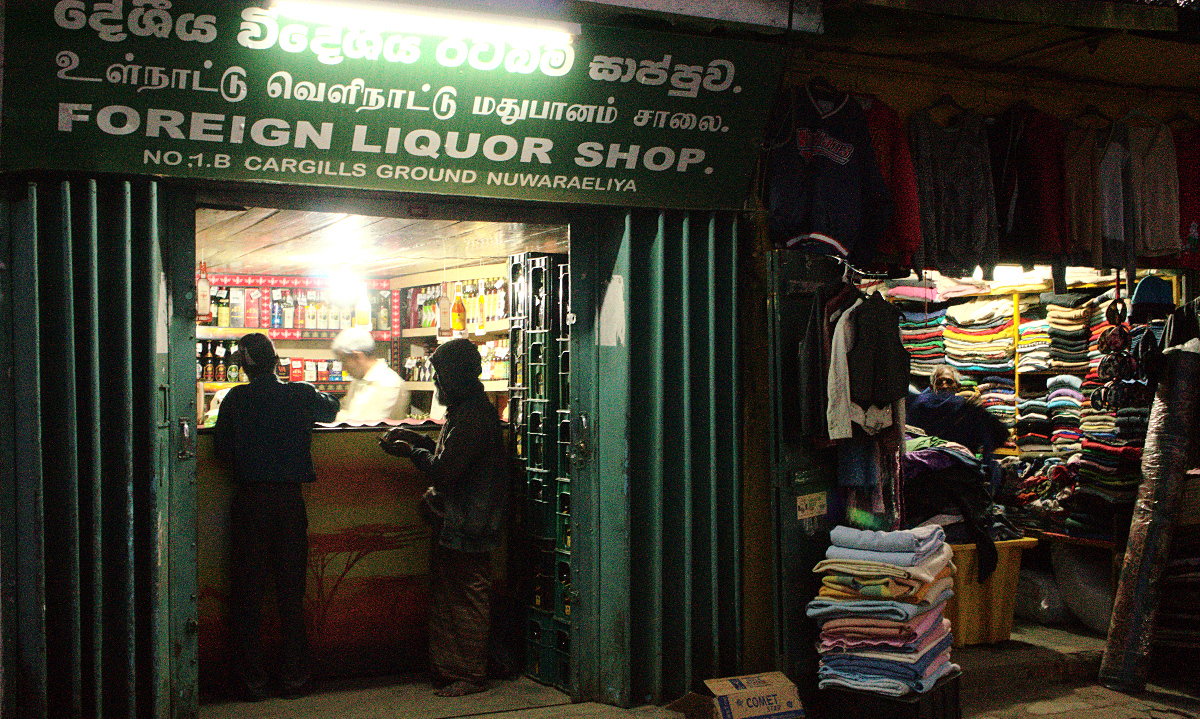
Nuwara Eliya - Smoke Rising from Evening TownAnd to round out an excellent day, a quick drink of “Foreign Liquor”.

Nuwara Eliya - Foreign Liquor Shop(events 15 Jan 2013)


7 Comments

Between the cold and gray of Armenia, and the coming freezing white winter of Estonia, I decided to take a sojourn in Sri Lanka:  To re-heat my chilled bone marrow, re-calibrate my eyes to color, and wear short pants for a bit.

I decided to start in what I knew to be a holy place:  Kandy:

Kandy - MonkThe home of a tooth from the funeral pyre of Buddha, Kandy was a seat of culture and kings for 600 years.  Until those bastard British colonialists [1 ] wiped out the ruling class in 1818 and expropriated the lands of the peasantry, reducing them to poverty.   While colonial rule was on balance good for some places, Sri Lanka was not one of them.

Kandy - Walking on the Tracks

Kandy is now religious and administration center, a world heritage site, and a place where business is done in the traditional way [2 ] :

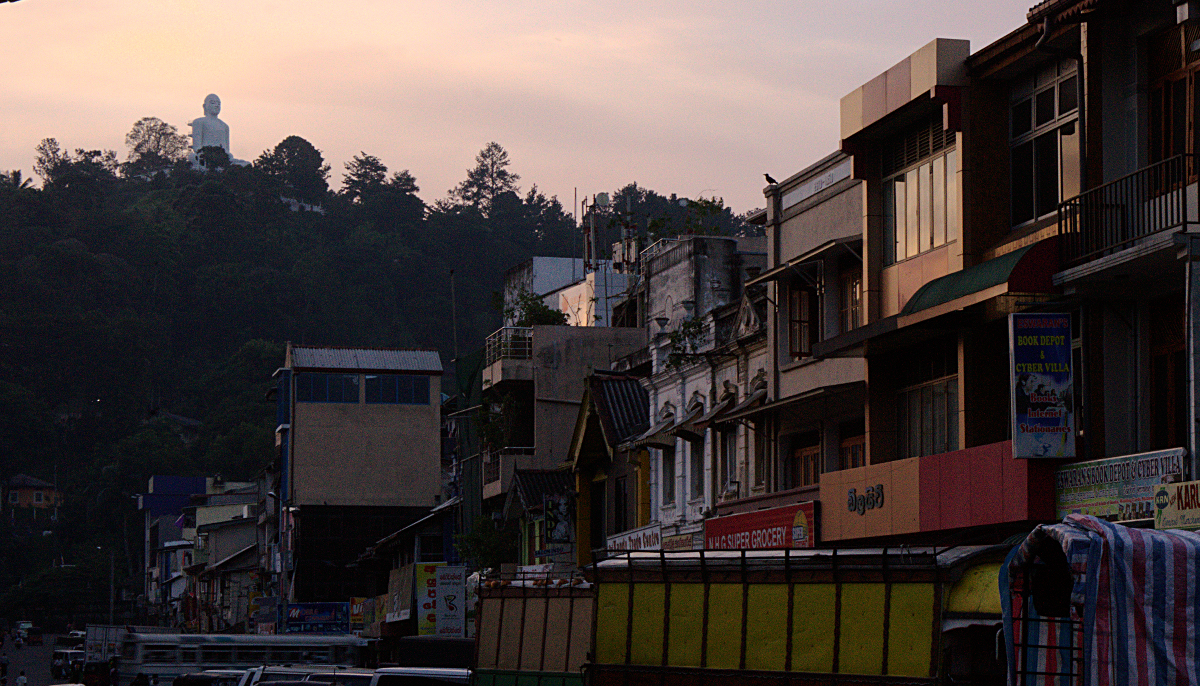
Kandy - Attorney at LawA city whose life, despite progress, is still overlooked by the Buddha:

Kandy - Buddha on HillIn its center is a lake that breathes and brings peace:

Kandy - Lake with BirdsI walk around the lake a few times then walk back to where I am staying, up in the mists of Kandy:

Kandy - Evening in the Mountains


[1]  For those for whom English slang is a bit obscure, when I refer to the “bastard British”, I do not mean they were all born out of wedlock. Some of them can clearly prove this not to be the case.

[2]  The last time I was here, in simpler but poorer times, I had ridden my BMW motorbike (slowly) through the beautiful and extensive botanic gardens, something the country is now well organized enough to no longer allow.


11 Comments

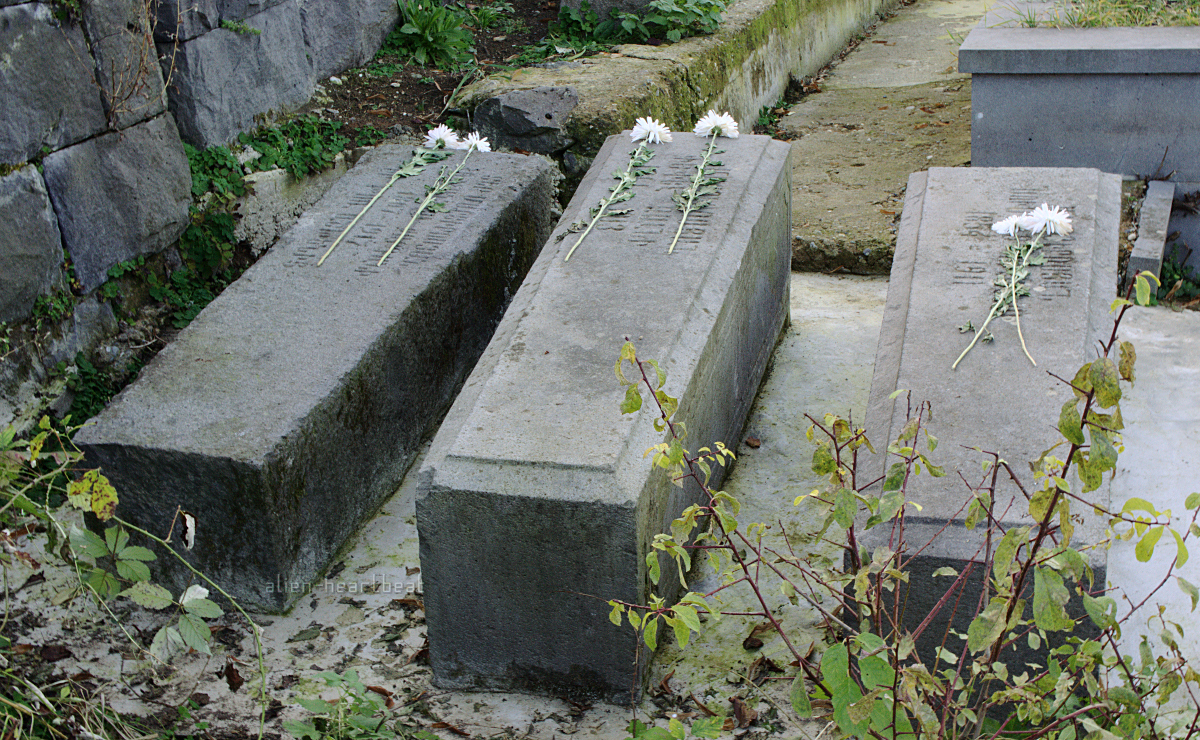
Three graves, of three members of a family, buried side by side.   Three old stone graves, each with two long-stemmed white flowers.   Each of these three people, with almost fresh white flowers, died a hundred years ago.

Armenian Genocide - graves of three members of a family who diedThey were a few of the 1.5 million who died in the Armenian genocide, and despite a hundred years, Armenians will not forget them.   These hundred year old graves were in an isolated reach of an isolated cemetery, yet someone still came.

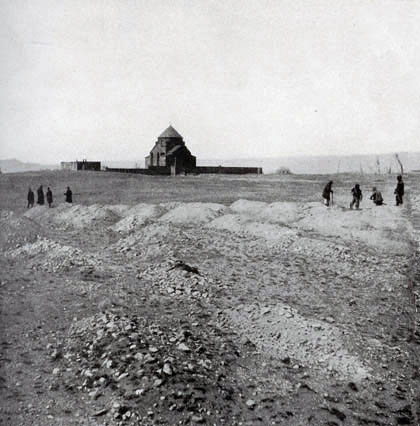
If you dig a few feet in the soil here in Echmiadzin you reach bones.   Small, frail bones.   The bones of the women and children who congregated here after fleeing massacres of their men, their husbands and fathers, in Turkey.   Weakened by hunger, disease, constant attacks and exhaustion, they mostly died where they stood.

Echmiadzin - church amid the bones of the Genocide

“Refugee burial ground – Etchmiadzin”
From the Collection of National Geographic

Sometimes governments do things that an ordinary human would be ashamed to do, even the humans that are their own citizens.   One such is the Turkish government denial of the Armenian Genocide [1 ].   Any search for the Armenian genocide takes you to the gray, terrible misery of a hundred years ago: to pictures that make any human weep.   This was the extermination for which the word ‘genocide’ was first coined.

I can understand that no man wishes to name his grandfather, for it was the grandfathers of the present men [2 ].   But how can a man stand tall, face his own children, and say this did not happen?

Two Armenian Boys, starved to death

“Starvation of two boys”
From the Collection of the Armin Wegner Society [3 ]

Some survived to become the grandparents of this generation:

Armenian children outside orphanage gates

“Clamoring for admittance: Armenian orphans at the Gyumri orphanage gates”
From the Collection of Near East Relief Society

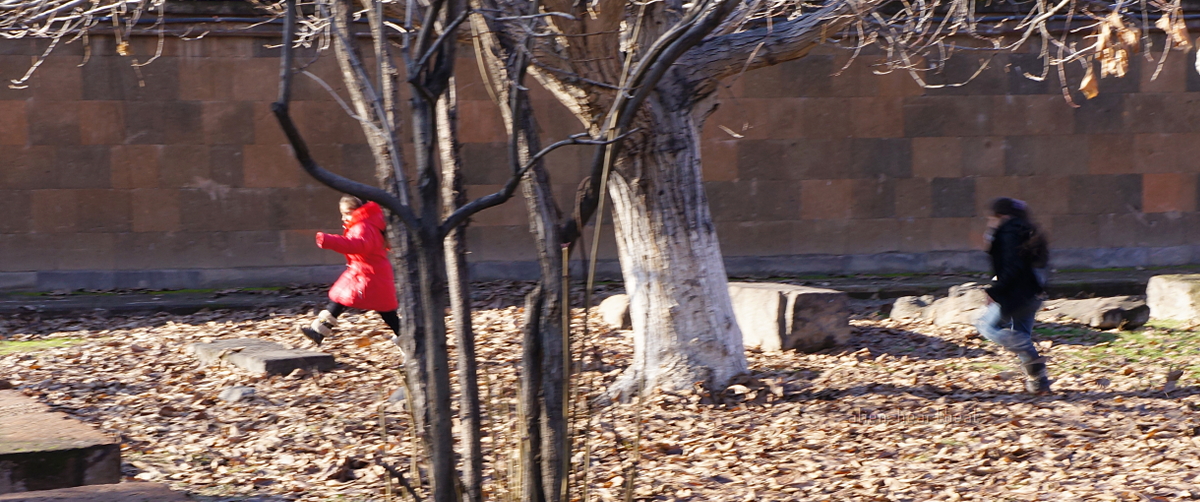
So the children of today can run amid the graves of their great-grandparents.

Armenian Genocide - Echmiadzin - children skipping over gravestonesAnd in the churches of Echmiadzin, the churches that stand amid the hundreds of thousands of bones, a light still shines:
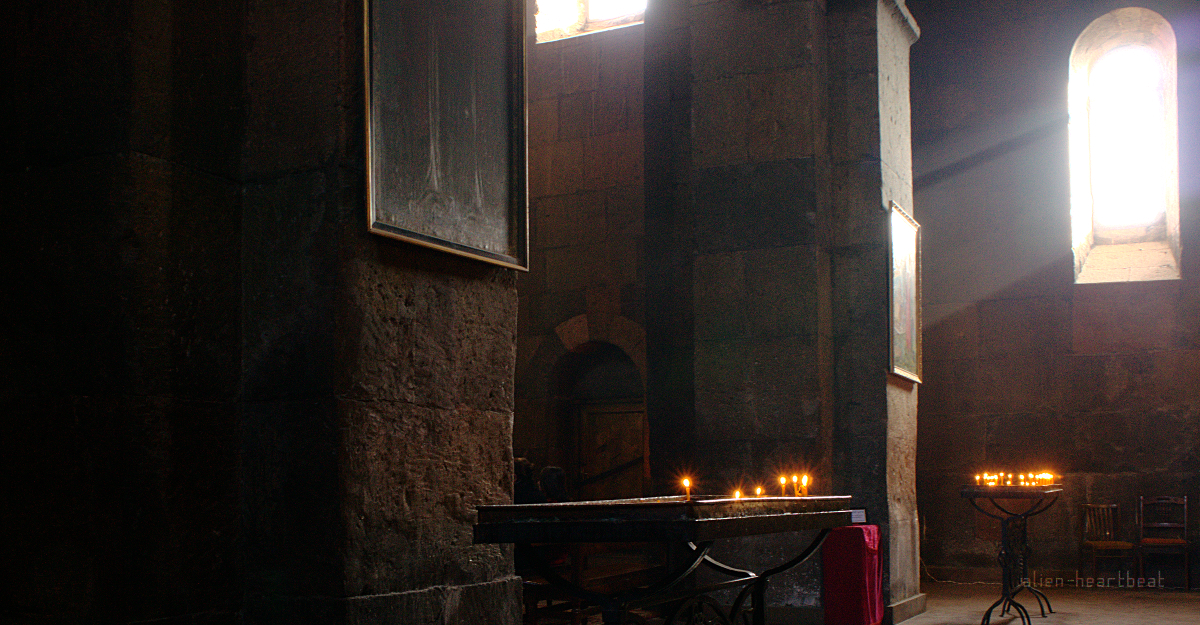
Church in Echmiadzin sitting amid bones of Armenian GenocideThis genocide did not succeed.

Six Armenian Children


Notes

[1] Many many Turks do not deny it. 100,000 Turks marched after the assassination in Istanbul of Hrant Dink, a newspaper editor who spoke out against the denial, shouting “We are all Armenians.”   Even at the time, some Ottoman officials refused to carry out the extermination orders.

[2] Hasan Cemal, the grandson of one of the 3 architects of the genocide, in a groundbreaking act of courage, wrote one of the first books acknowledging the genocide, and the role of his grandfather.   I came across it when it fell from the bag of a Turkish man on a plane.   He told me the story of the grandson and the book.

[3] Armin T. Wegner was part of a German detachment stationed in the Ottoman Empire.   He witnessed, and secretly documented and photographed the desert death marches of Armenians during the height of the Armenian Genocide, for which he was arrested.   In Germany Armin Wegner later also denounced the persecution of Jews, for which he was imprisoned and tortured.   Few people one comes across in history have conducted themselves with the nobility and conscience of this man.   More on Armin Wegner here.


40 Comments

The next morning in Vanadzor it was -6°C and clear, with the sweet smell of pine woodsmoke.   Old fruit hung from leafless apple and pear trees. The cemetery was large and overgrown, with headstones that showed many who were born late 1800s, and an unusual number who died in 1952.   Must have been one of the tough years.   But what most struck me here, and in all Armenian cemeteries, was the many dual husband-wife headstones.

These two were born in 1871 and 1878, but died together in 1952.   Matter of fact people from a different century and a different world:

Armenian Cemetery - Two Centuries Together

Many told a single story: the husband in uniform, killed in the 2nd World War as a young man, the wife dying 60 years later, an old woman:

Armenian Cemetery - Man Died in War, Wife 60 Years Later

This one also spoke: the parents born in 1895 and 1897 had a son in 1921.   He was killed in 1941 and is shown in his uniform.   Despite this they somehow lived another 40 and 50 years:

Armenian Cemetery - Father, Mother, Son

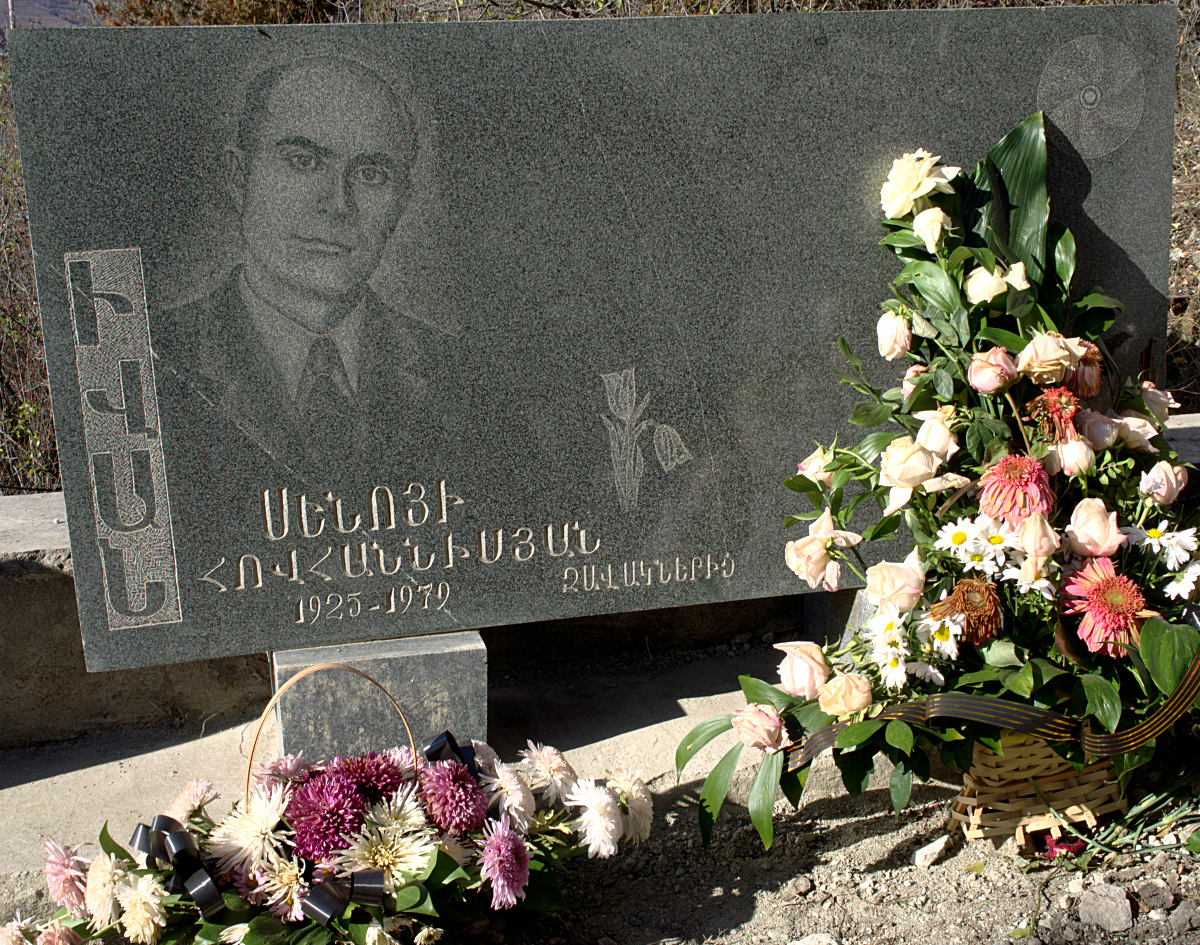
Many many headstones had just a picture of the husband, and a space beside him waiting for his longer-lived wife.   This one, a man who lived from 1925-1979.   A coat and tie and a nice face etched in stone.   The space for his wife is still blank.   But everywhere around this headstone there are fresh and drying flowers.   This man, whose premature death only hints at the loss, must be still loved:

Still So Loved - Waiting Man Who among us, 33 years after our death, will be still so loved?

(events  29/Nov/2012)


23 Comments