Listening for the Alien Heartbeat

There is no functioning road from where I was (Tamatave) to where I wanted to go (Maronantsetra) and as walking would have involved galoshes and waist deep, or worse, river crossings in the rainy season, I flew.  None of my childhood memories of galoshes are good ones.

We flew in to Maroantsetra airport, watched from the side of the runway by cows, and a family under an umbrella.

This picture is through the window while I was waiting for my pack to get offloaded.  Note the kid in the trailer, and the three rather sturdy local chickens that look like they could be harnessed to pull him along.
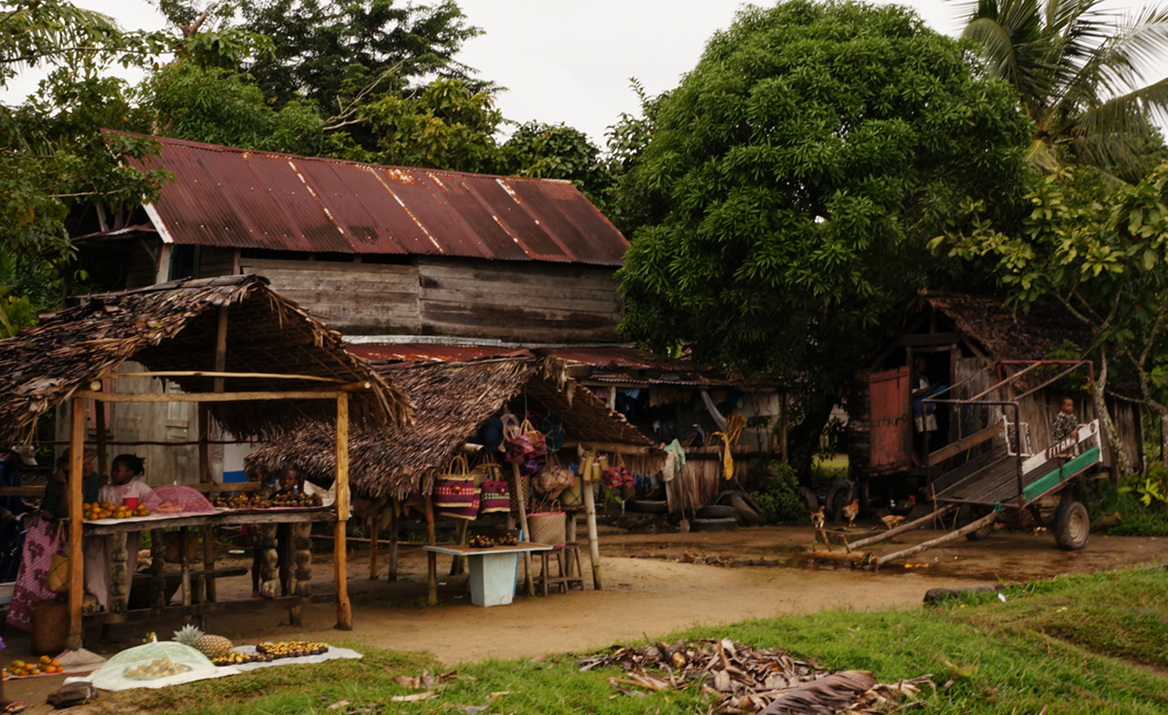
Maroantsetra - building outside airport

These kids below were also just outside the window. They were friendly if cautious,and what they were doing here I can’t guess. They weren’t selling anything or begging.  They did not seem sufficiently well-connected to know anybody they could wait for who could possibly be traveling by plane.  I guess they had nothing better to do and were here for their own amusement.  Apparently many families only send one child to school, and remarkably, not always the boy.  I (later) came across one family where the boy was the only one not sent, as apparently he was “not that bright”.
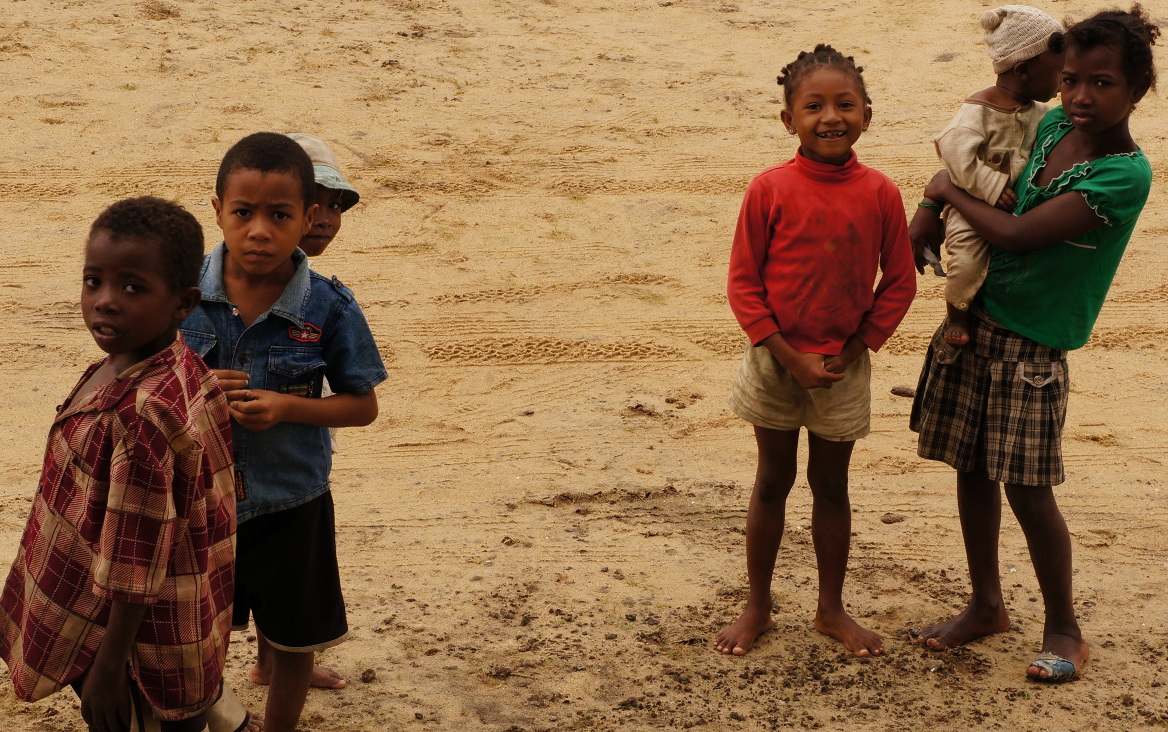
Maroantsetra airport - kids outside terminal

Of course once I stepped out of the waiting area, not only were there kids, but chickens, ducks and stalls selling things to eat. Useful, given that the local airline gave out only a small hard lolly.

All in all, my all-time favorite airport. Two pictures are sufficient for one post, so this time at least, the cows and the family under the umbrella will retain their anonymity.

Postscript:  25/June
While waiting for the plane to take me out, I confirmed that every time a plane landed, these (and other) kids would materialise from the surrounding jungle, and when the show was over, they just evaporated back.  No begging, no selling, just here for their own amusement.  Which, given that most of the local kids have only stones, sticks and odds and ends for toys, is not surprising.


4 Comments

(Madagascar, 4 Jun 2012)

One of the sobering sights of Tamatave is the cadre of  ex-middle-aged Frenchmen enjoying startlingly poor judgment in their particular choices of young Malagasy women.

Some are permanently stranded here (this used to be a French colony), some just felt insufficiently loved at home. But overall these were not gents whose judgement I admired.

But as I have discovered, some people will always make unlikely choices. Passing an island in the south of the Philippines (years ago on a windsurfing trip, clothes strapped to the base of the mast, money in a plastic bag) I encountered an older German with what appeared to be three, very decent, young Filipina wives. He was making a living as the only boat engine repairman for some nautical distance. But, despite these blessed circumstances – three wives, and a monopoly, in a paradise – he was clearly looking much the worse for wear. He had given himself to drink.

Now why one would give oneself to drink with three wives to manage, I did not (at the time) understand.

It may be that the further you go to look for happiness, the further you distance yourself from it.  Here, also in Tamatave, is a couple that don’t have much, but even so seem to be very happy with the way things are.

Tamatave - two nice people

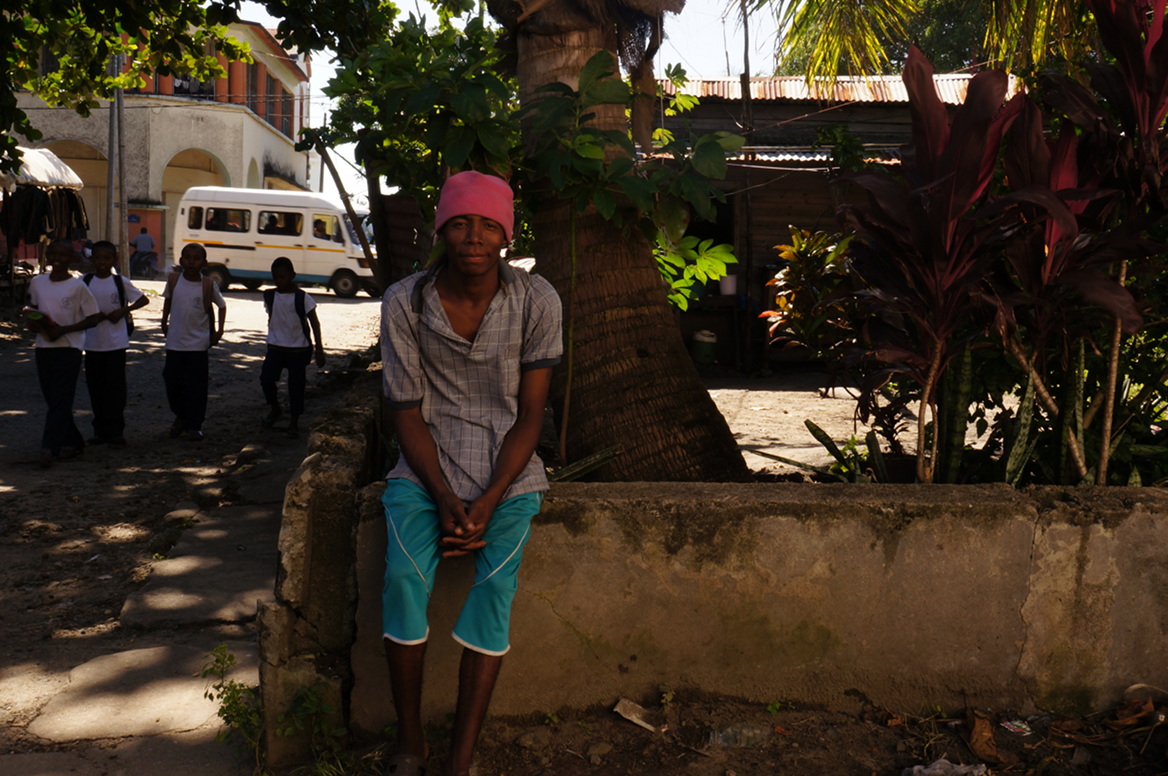
And here a nice gent, not far from his home, and with even less, who still seemed to find life quietly amusing.

Tamatave - smiling man with headband


6 Comments

Sometimes understatement is so understated as to constitute criminal misrepresentation.  Such is the case with Tamatave.  The guide book I was lent described it as having “an air of shabby elegance”.

A port, a former slave trading centre, and the 2nd largest town in Madagascar, the elegance is not just shabby, but apocalyptically shabby.  What appears to have happened is that it was a nice boulevarded colonial port a century ago, but it has suffered a biblical rain for the last hundred years.

Tamatave - muddy street
One of the “shabbily elegant” buildings opposite my hotel and the Ministry of Finance, in one of the best parts of town.

Tamatave - house opposite finance ministry
On the first evening as I walked to the beach-front for the holiday festival the first two working girls I saw were missing their front teeth;  a small sample to be sure but a worrying omen nevertheless.

Even the overseas Chinese well-known for their business-like persistence, here just run their shops as best they can.

Tamatave - chinese building


1 Comment

They had been leaving China for centuries: the Cantonese, the Fujienese, the Chaozhous, and going especially to Thailand, Indonesia and Malaysia to take over commerce and make a more certain life than crumbling Imperial China could give them.   A few hardy souls even made their way to places like India and Madagascar.  In several towns I went to all the bigger non open-fronted shops were run by such overseas Chinese.

In fact talking to them many said they, or their parents, came over in or around 1950 (ie just after the 1949 revolution).

And then it would be a wistful:  “China is doing well isn’t it”.

They looked put-upon here, insecure, not at all enthusiastic or full of hope.  But their children, as far as I could tell, did not speak Chinese.  Going back would be difficult.

So it seems this time that the ones who caught the boat were the ones who missed it.

Picture:  Overseas Chinese shop in Moramanga.  The non turning-on of the lights was not just this shop, but was every Chinese shop I went to, in every city I went to.  It wasn’t that the electricity was out – non-Chinese shops had their lights on.  Clearly their margins were insufficient for lights.

Moramanga - overseas Chinese shop - no lights


Leave a comment

They had been following along behind me at a respectful distance for about a kilometre.  Respectful only in the sense that at that distance they could laugh at me a bit more freely.  My jumping over streams rather than walking right through them, my backpack, my walk stick, my loping walk,…

Madagascar - Forest - kids on walkFinally they drew up level with me and said Salaama (hello).
They asked me where I was going – a place about 10km down the road.
They asked me where I came from –  I said I lived in China.
Did I speak Chinese?  Yes.  This cut no ice with them.
Did I speak English?  Yes.  That met with their approval.

We walked along a few kms together and when our paths diverged I asked if I could take their picture.  They said ok and the girl pulled off her head scarf so she would look prettier.

I did not have my camera handy so I took a picture with my phone.  The boy asked if I would send them a copy.  I asked him to write his address, but neither of us had a pen.  So I asked him for his email address (I was thinking he might have one at school).

No , he looked at me glumly, no email.  Where he lived I am guessing also had no electricity – I had certainly seen no wires in a while – so email was a luxury twice removed.


Madagascar - Forest - kids on walk - 2I asked how far their village was:  “15 km”.
“That will take a long time”, I said.
No he said: “We will walk fast”.

Only later did I notice that my picture did not include what stood out the most:  their feet.

I was in big boots, suitable for this rough, scarred road, and their feet were bare.

Equally clear, from looking at their feet, they owned no shoes.


2 Comments

This was a big town on the map, a famous town.  So I had walked 11km here confident that I could get some luxuries:  powdered milk, biscuits, tea, fruit and most of all, chocolate.

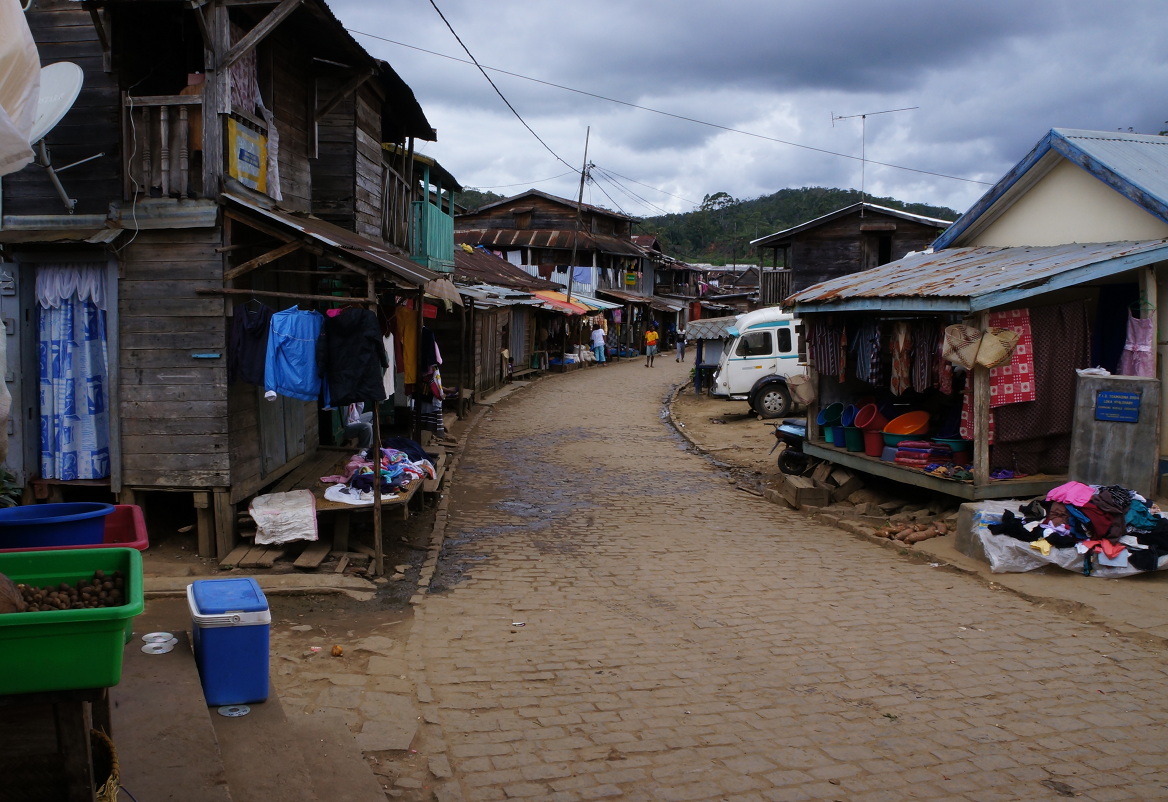
But as I walked in, I knew there would be a problem:  black wooden shanties on a rutted road, very small shops with very dusty shelves, and not much on them.

Madagascar town - centre

It brought home to me again the people in this country are (mostly) poor and some are dirt poor.  What was available was basic.

Madagascar - village - shop with beans

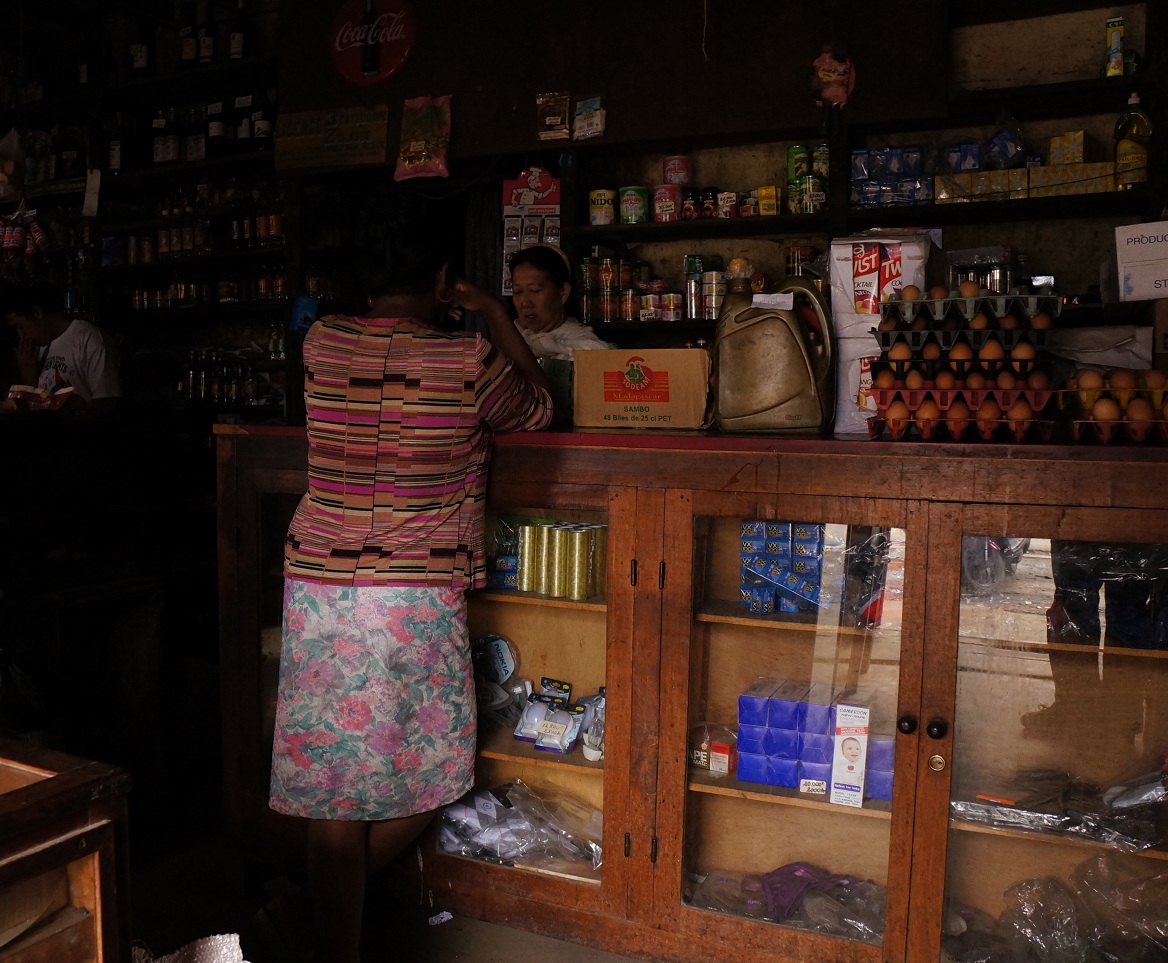
I found biscuits of a sort, and chocolate, of a sort.  I bought a bottle of coke from a large (for here), accommodating woman.  She gave it to me unopened, and when I asked her to open it, she looked at me with a look that said any chance I had of sleeping with her, or anyone she knew, were shot* and just motioned to the blunt, worn, counter edge.  I acknowledged, banged my hand on the bottle top and the counter edge, and at the 2nd attempt, got it open.  Well, maybe somebody would sleep with me someday.

* (Mind you, at best, I would not have described her as being in my target market, nor, it seemed, I in hers.)

But like (almost) everywhere, there are happy playing children, who when I took out my camera, smelt it and came running.

Madagascar village - kids playing


Leave a comment

The greatest advance in human health has been not penicillin (despite the gratitude of several of my brothers), not surgery with anesthesia, but simple public hygiene: clean water mainly, and to a lesser extent clean food.

So it makes me wonder when I pass a butchery that has in no way whatsoever changed since the Hittites sacked Babylon in 1593 B.C.

Some places a wooden open-fronted stall with an earthen floor, in bigger towns the same stall with an unspeakably grimy cement floor. Hanging from hooks, legs, tails and ex-organs in various states of decay, and on the counter a red and white lump of ground muscle, gristle and fat that is so fly-blown that the flies must be part of the deal. Running in and out, chickens. Leaning on the counter a toughish, slightly dim looking gent, chewing something. I am guessing he was a man with several roles about the town, none of them sparkling with sex-appeal.

I once had my own flirtation with butchery and failed miserably. My grandmother had brought home a goose and marked me, as the eldest, to dispatch it. She was an old-country woman, who soaked her gravy up with bread, believed geese belonged in pots and men should carry axes. It was said, not without premise, that she had purloined the goose. Though where, and from whom, one purloined a goose I (still) do not know.

In any event, I could not stand shoulder to shoulder with this man, and once I had seen one of these butcheries, it was the last time I ate meat on the trip.

Madagascar butchery

Picture:
The chickens disport themselves freely – this man deals only in pigs and cows.


2 Comments