Listening for the Alien Heartbeat

It is rare to see a civilization crumbling before your eyes, but here it is.

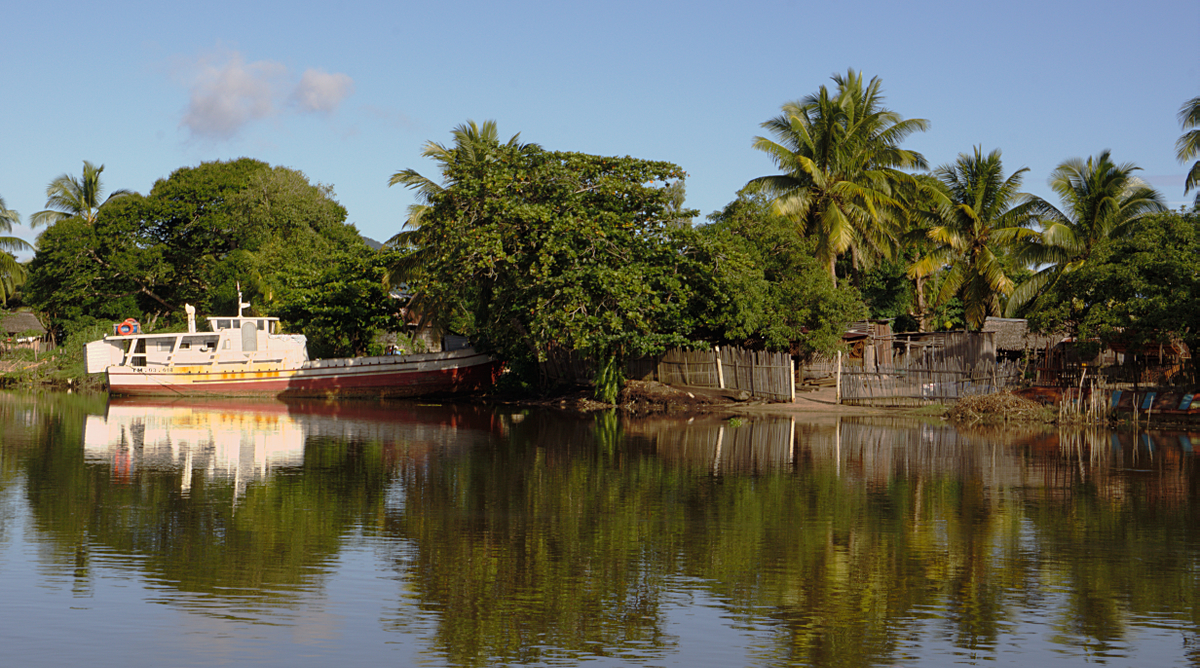
crumbling buildings, breakfast house
In Tamatave I thought the shabby decrepitude was due to 100 years of rain.  But here, facing Africa, it is hot and dry.  And yet here the same sense of ineluctable crumbling.
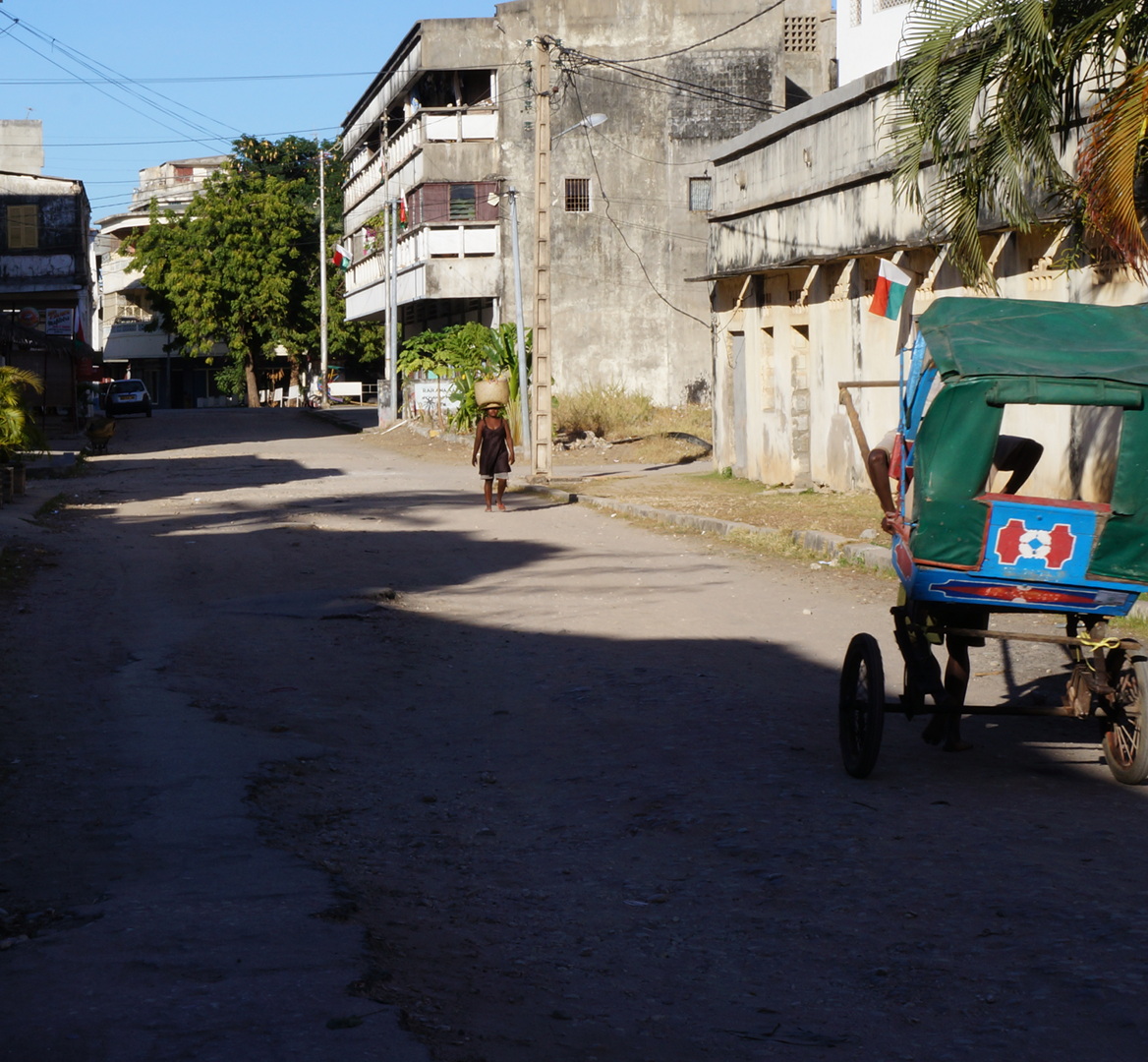
Street with woman and basket

The above and all following pictures were taken in the best area, near the government buildings and ‘major’ hotels here in Mahajanga, one of the biggest cities in Madagascar.  They are not in any way exceptional.  The picture is everywhere the same:  a few with money, but the majority beggared:
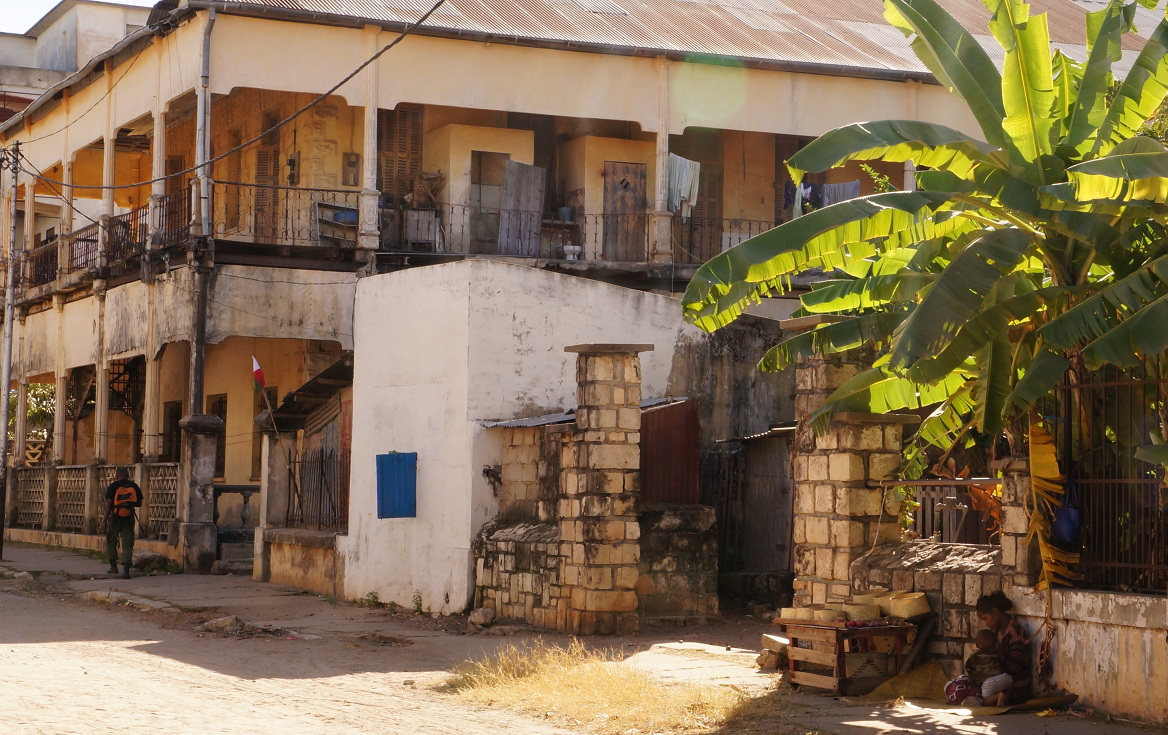
Woman vendor with kid outside building

The lack of generally recognized (or respected) central government authority since the coup in 2009, believed by many to have been French-engineered, means even government buildings now entertain goats and chickens.

Goats entering the Tribunal building

Why would they do it?  Formerly a French colony, apparently the popularly elected president was moving the country away from France, and the final straw was that he sponsored a constitutional amendment to replace French as the #2 official language with English.  No doubt you need to be French to understand.  However he was also responsible for firing on protesters, something even the most popular mandates do not cover.

But even the progressive government disintegration that has continued since then is not the whole story.

The final piece may be that this land has been so bountiful for so long that the people have insufficient sense of infrastructure.  Stuff grows in the forests.  On the road here there were small forests of mango trees everywhere.  Chickens, ducks and goats run wild.  Rooves can be thatched.   So preventative maintenance, while there is little money to do much of it, may also not yet be in their genes.
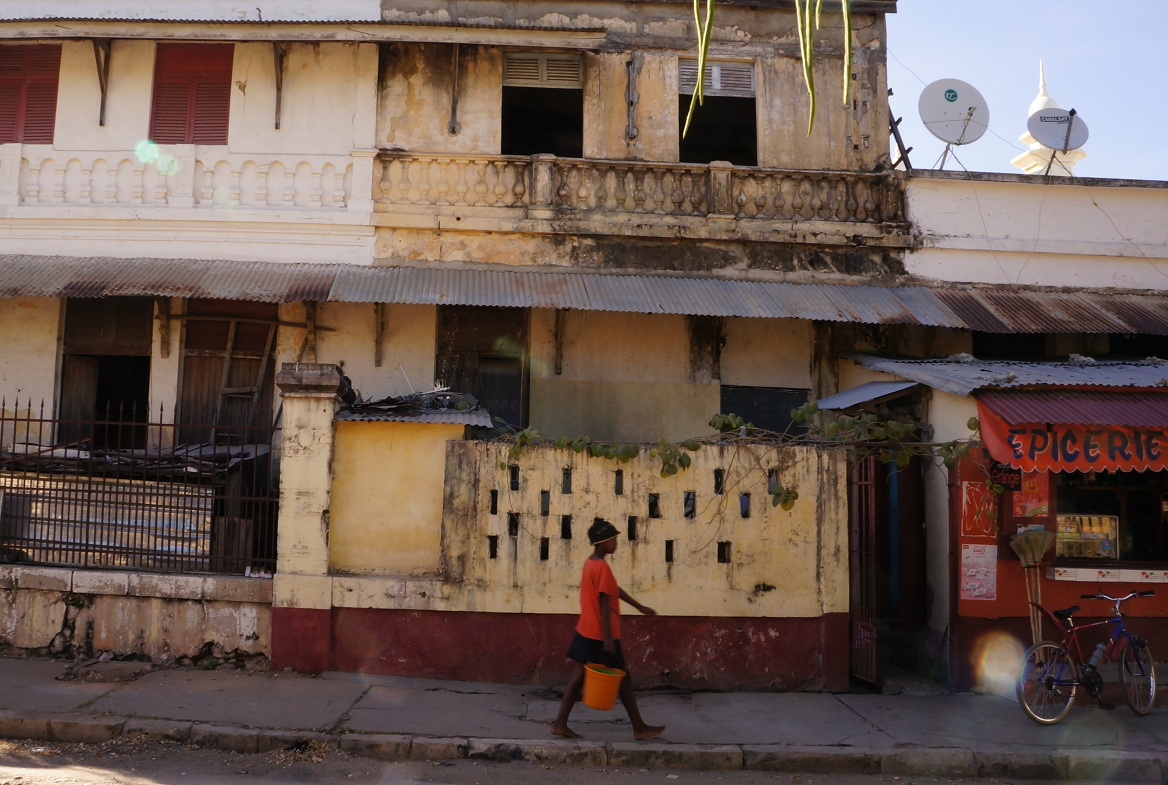
Crumbling building, girl with orange bucket


2 Comments

My body is so covered in scars, gashes and holes that, in some lights, I look like one of those bodies ill-advisedly put together rather than organically grown from native chromosomes.  A consequence of my lifelong wrestle with an improbable clumsiness.

So when traveling I take a kilo of bandages, plasters, wound-closures and antibiotics.  Using a local analogy, this is about how I am starting to look,  a once excellent specimen, now hopelessly ramshackle:

Gray house, now crumbling - Tamatave

And that is my good side, on a good day.  Though this is where I am likely headed, a final fusion of intelligent design and catastrophic mismanagement:

Antsiranana - Building with trees showing through

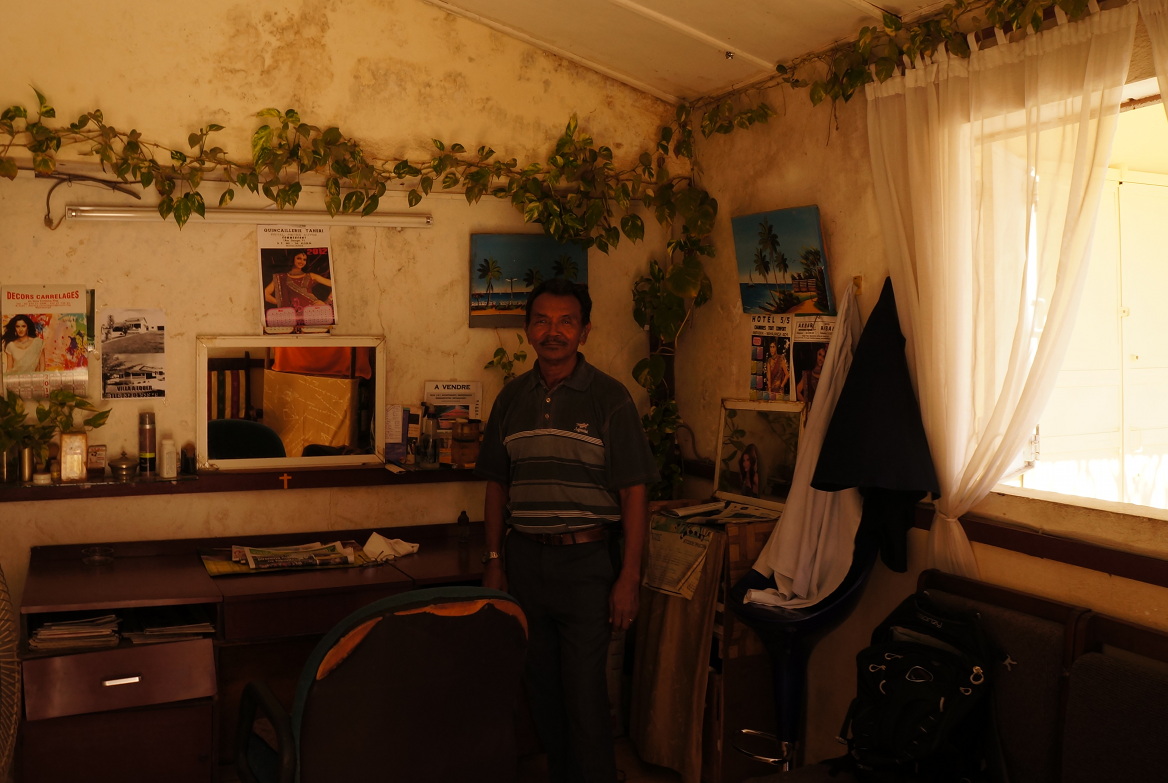
As a consequence of this continuing deterioration my local Indian barber must draw on all his skill and resources, including racy Hindi calendars and a softly curtained escape route:

Barber - Mahajanga

Mahajanga- woman selling mandarins, with kid


and passing mandarin sellers consider themselves lucky by comparison.

Even her kid seems appalled.


Leave a comment

Back to the high plateau in the centre of the country yesterday, then today a car 570km to the west coast.  From a wet place facing Asia, to a dry place facing Africa, but still bountiful, with small forests of mango trees, tamarind trees and jujube trees lining the roads.

Village trees, road to Mahajanga

This is the #2 highway in Madagascar, but still painfully potholed, and some of the bridges are best crossed in a state of grace and with one’s financial affairs in order.

Road to Mahajanga- long, rusty bridge

One bridge was out, and had been out all day.  It wasn’t washed away, just falling to bits.  We joined a long queue of goat carrying vehicles and partying Malagasies, to wait for a temporary repair.  (The big truck is carrying bridge parts.  I hadn’t previously known there were such things as ‘bridge parts’).

Road to Mahajanga- bridge out

Eventually tracks were laid down and the vehicles passed over.  However, the tracks had to be re-adjusted after every vehicle, and poor driving by any one of the drivers would have seen his vehicle falling between the tracks and the side of the bridge, with likely fatal damage to both parties.

Road to Mahajanga - bridge repair

If I ran my life like that I would be cackling on street corners with no teeth, two bent wooden legs, and a rusty claw.  If I had ever had a monkey, he would have long deserted me.

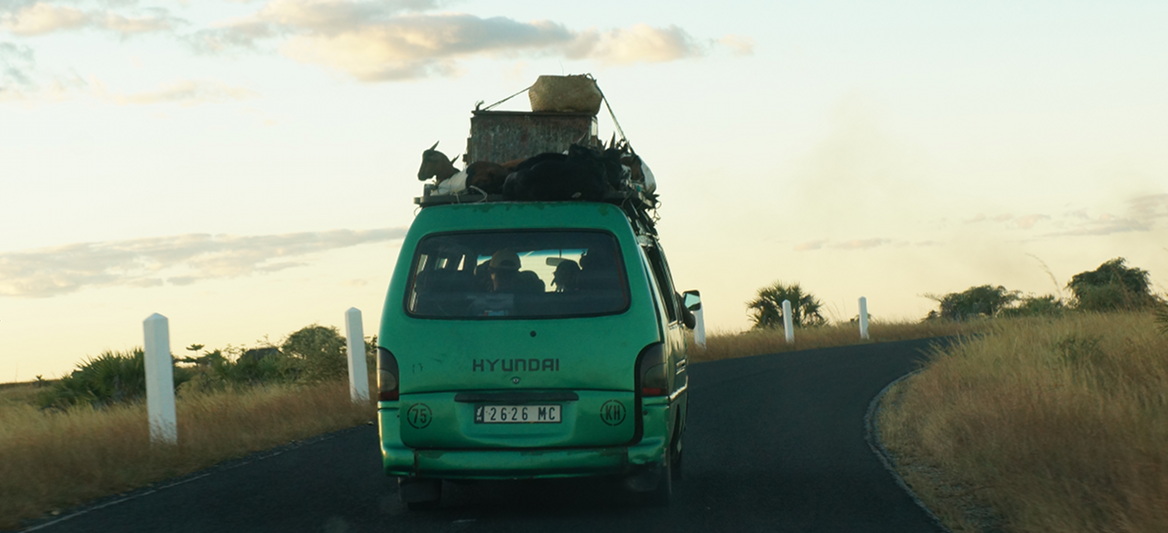
In any event as evening came we continued, along with the rest of the inter-city commerce.

Road to Mahajanga - intercity commerce


Leave a comment

Masoala - supply boatYesterday, the supply boat came, to general excitement as its goods were unloaded, inspected, rubbed, tried on and then put away for a rainy day or a sunny day as the case may be.   Part of the excitement was no doubt that it had not sunk.

This machete wielding gentleman who walked past as I was shooting may have a sackful of human heads on his back, but it could just as likely be a sack of coconuts.   I have to say though that while I have wondered why these gents swing their machetes so vigorously when they walk, I have generally thought the better of asking.

Masoala - man with machete

The rather old supply boat stayed into the evening, bathed in the magical silver light of this place.

Masoala - boat, pirogue in sunset

Then for most of this morning, perhaps with the sunshine or the coming of an important festival, a wave of pirogues (dugouts) came with people from local villages selling bamboo, coffee, cloves, cinnamon, coconuts, vanilla and all manner of forest wares.

This gent is the coconut tree seller and his wife.

Masoala - coconut tree seller and wife

I later walked to one of these surrounding villages, its prosperity marked by the self-satisfied corpulence of its geese.

Masoala - village geese

On this path out alone there were vanilla trees, coffee trees, pepper trees and tamarind trees.  I guess they just pick the stuff, dry it, then sell it to us.  As the old song goes:  “Nice Work If You Can Get It”.

Masoala - vanilla, coffee, pepper trees


Leave a comment

Ensuring that when you get sick you are in a nice place is one of the skills of the competent and well-organized traveler. I knew a guy who had hepatitis while on the shores of Lake Toba (a nice place), and waited it out while being fed fruit and tropical smoothies by a lass who was in the habit of wearing so little it couldn’t fail to lift a sick man’s spirits.

I, on the other hand, got hepatitis in the Baluchi desert, where the only food available on a daily basis was an oily dahl, the water came form a deep and smelly well and the local tribesmen had taken up arms against the government. (These tribesmen, partly out of the need for speed, and partly no doubt to improve the gene pool, have been known to shoot the sick.)

I have also had dengue fever in a mud hut with a low-bellied pig rooting around outside for company. The pig, as is the custom of his clan, concentrated generally on his own business.

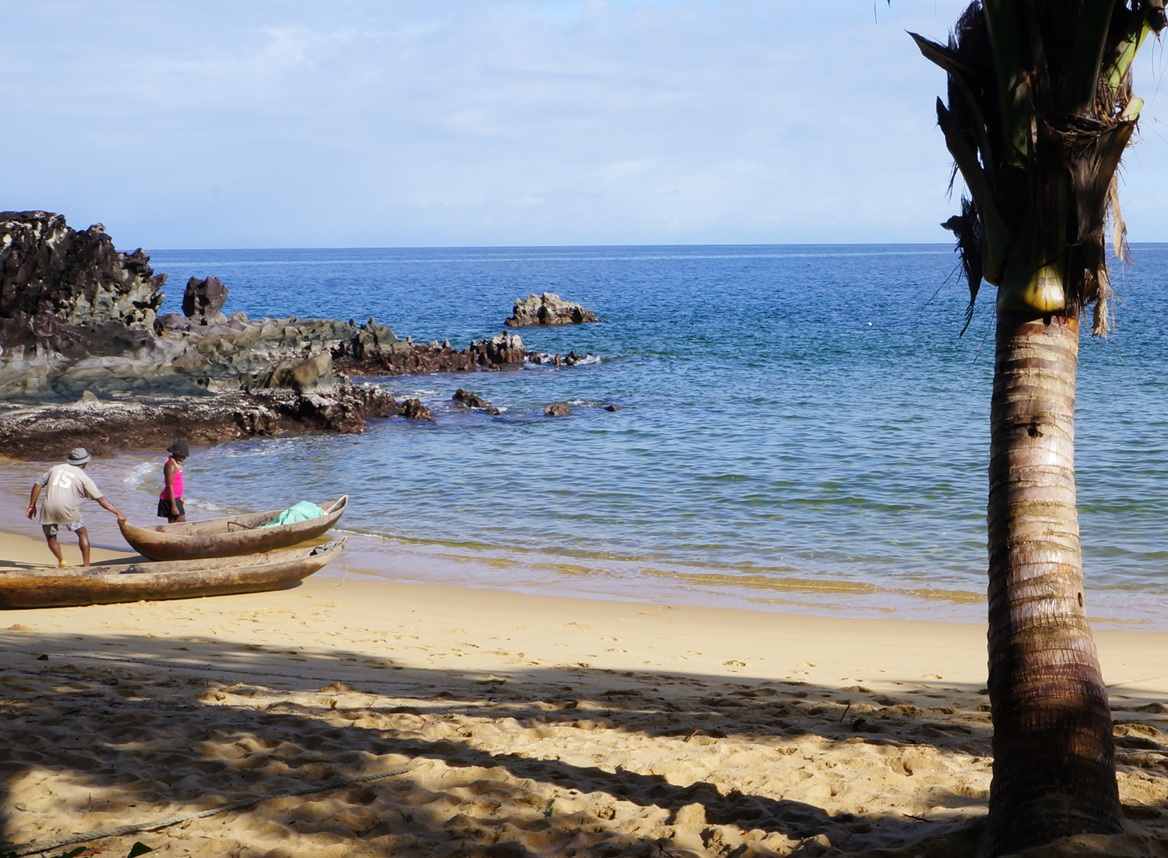
This time at least I got sick in a nice place.   This gentleman may be standing up in awe and wonder of the place, but I suspect he is just doing a bit of evening fishing.

Masoala - Fisherman standing on pirogueThe only downside is that the nearest doctor is a day away. But provided I don’t actually die (and as I am not convulsing, hallucinating or erupting into suppurating buboes this seems unlikely), I could do much worse.

There is the sound of the sea, and the nightly howls of murder and mating among and between the forest’s denizens.  Further, no matter how bad I feel, unlike my neighbors for the evening nothing here has any real prospect of actually eating me, other than tiny little bits I might not notice.

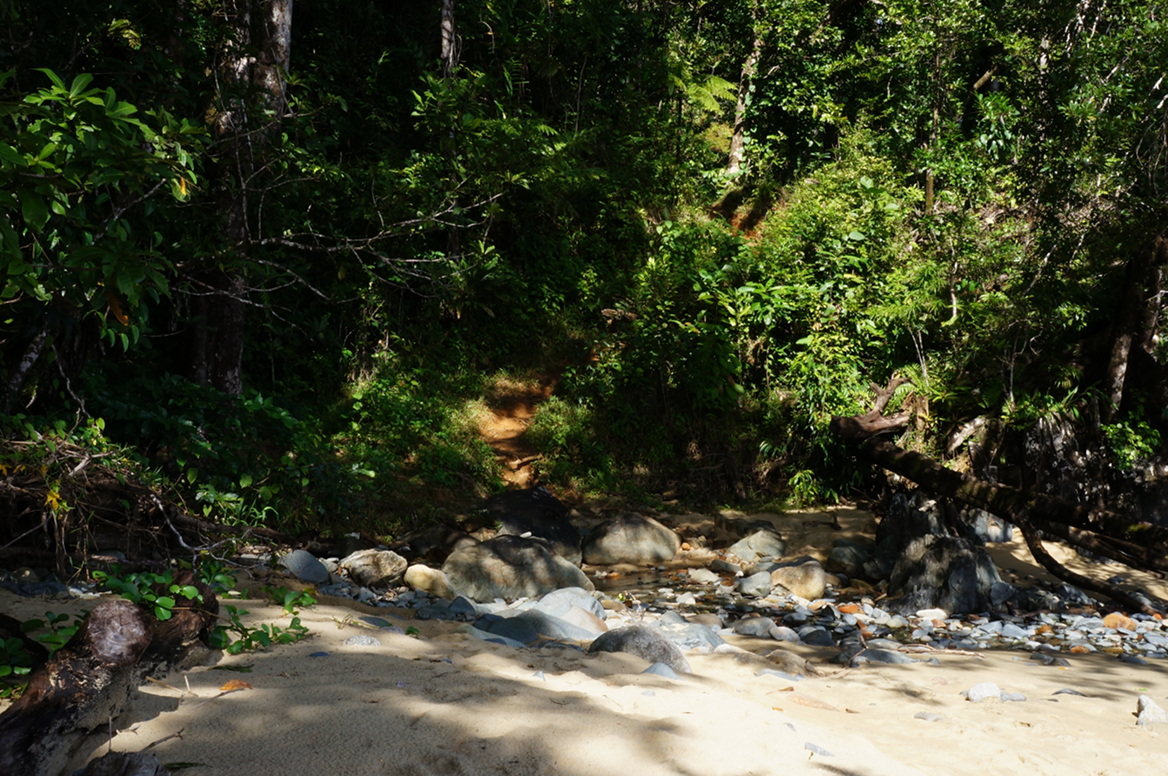
Picture:  The path into the forest.  One would not think that such an innocent looking place could be the scene for such regular howling mayhem at night:

Masoala - path into forest

So, while I have some fever and feel a bit poorly, I could do much worse than choose here to be sick. I sit around eating bush bananas, drinking bush coffee ground in a huge wooden mortar, sweetened with bush honey and bush ants, and watching the sea (and the odd pirogue with an unexpected sail) go by.

Masoala - pirogue with sail

So at last here I am on the mend, a bit pale perhaps, maybe even a little introspective, but with my trademark ill-humour thankfully intact.

Masoala - mc on shore

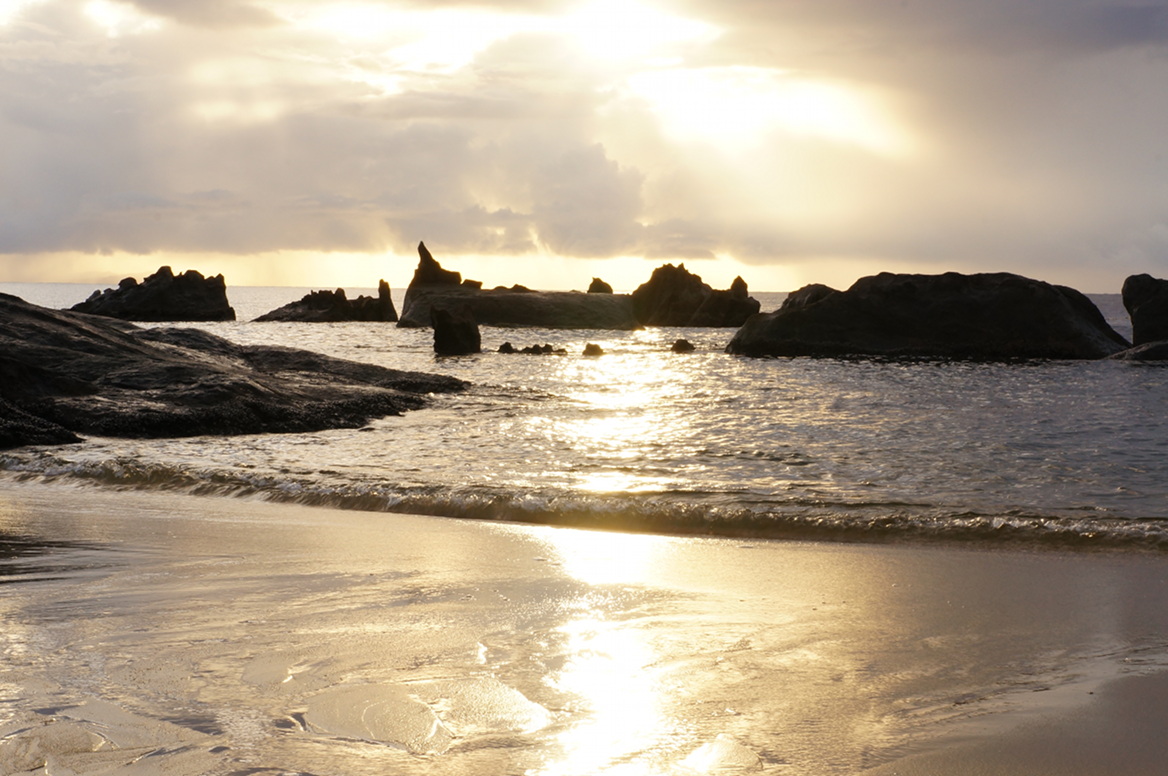
This last photo I just had to throw in. I don’t know if the colors will come through on your screen, but in the original, the silvery 5pm light creates magic.

Masoala - evening sunset


Leave a comment

Due to some defect in an otherwise impeccable upbringing, I am not a lover of snakes, not even a liker.  So when I returned the other evening to a snake hanging out outside my door I told him or her with my usual authority that I would prefer he or she carry on their business of eating other animals elsewhere.  I then remembered that snakes are deaf.

At another place I stayed there was a hardy young South African who would pick up the snakes by the tail and generally mess with their heads, until they became so distraught they decided of their own accord to move on.  By hardy, I mean he thought nothing of spending a month in deep Masailand with the Masai tribesmen when his bus broke down somewhere in north western Tanzania, and while hitchhiking in dark places had been shot at multiple times with weapons of multiple calibers.  Despite his hardiness, he did seem somewhat grateful to still be alive.

But the snakes in Madagascar are, poor souls, “back-fanged”, which means apparently that they are “effectively non-venomous”.  So when one of these back-fanged sissies appears outside where I am eating, I do not, as a result, feel the need to hurry through my meal.  If I was in Africa on the other hand, I certainly would move to finish my meal without delay.

Up to now my most intimate encounters with snakes have been with snake soup in China.  A winter dish that warms their spirits, it was frequently served by potential business partners in the hope of lubricating a deal.  Personally I prefer my deals unlubricated by snake soup, but can only wonder at the excellent deals that must be done by those extremely well-lubricated deal-doers who also drink the snake’s blood before the rest of the snake is put in the pot.

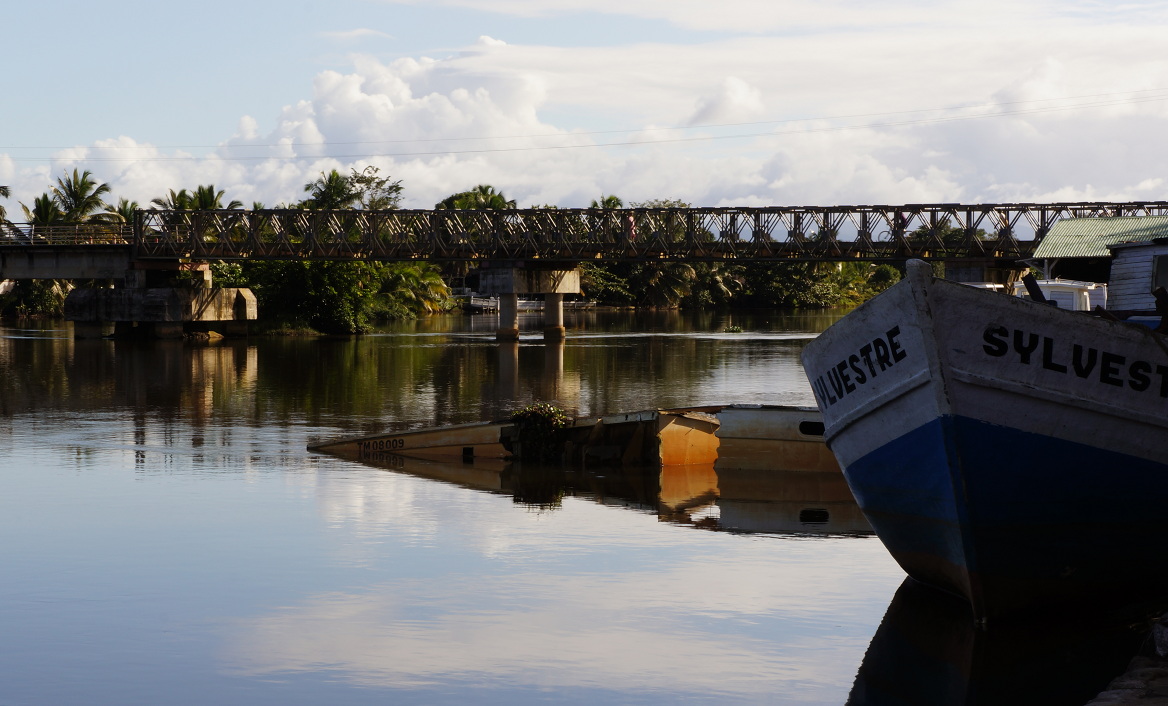
My attempts to take pictures of snakes at night (when they appear) without a flash (in the interests of travelling light I did not bring one) were hopelessly unsuccessful.  So instead a picture of some local old-style river transport:

Maroantsetra - river of charm

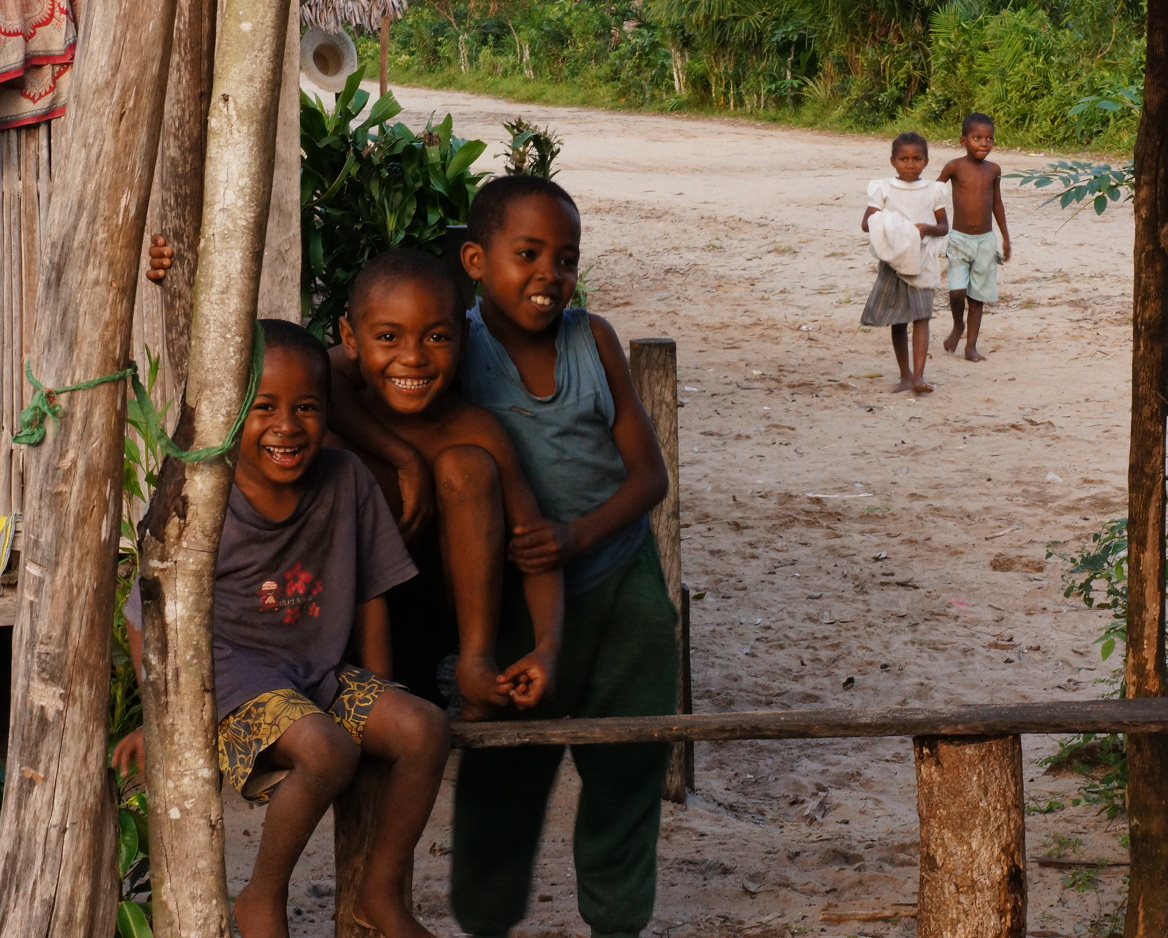
and some local wildlife on a road out of Maroantsetra:

Maroantsetra - local kids

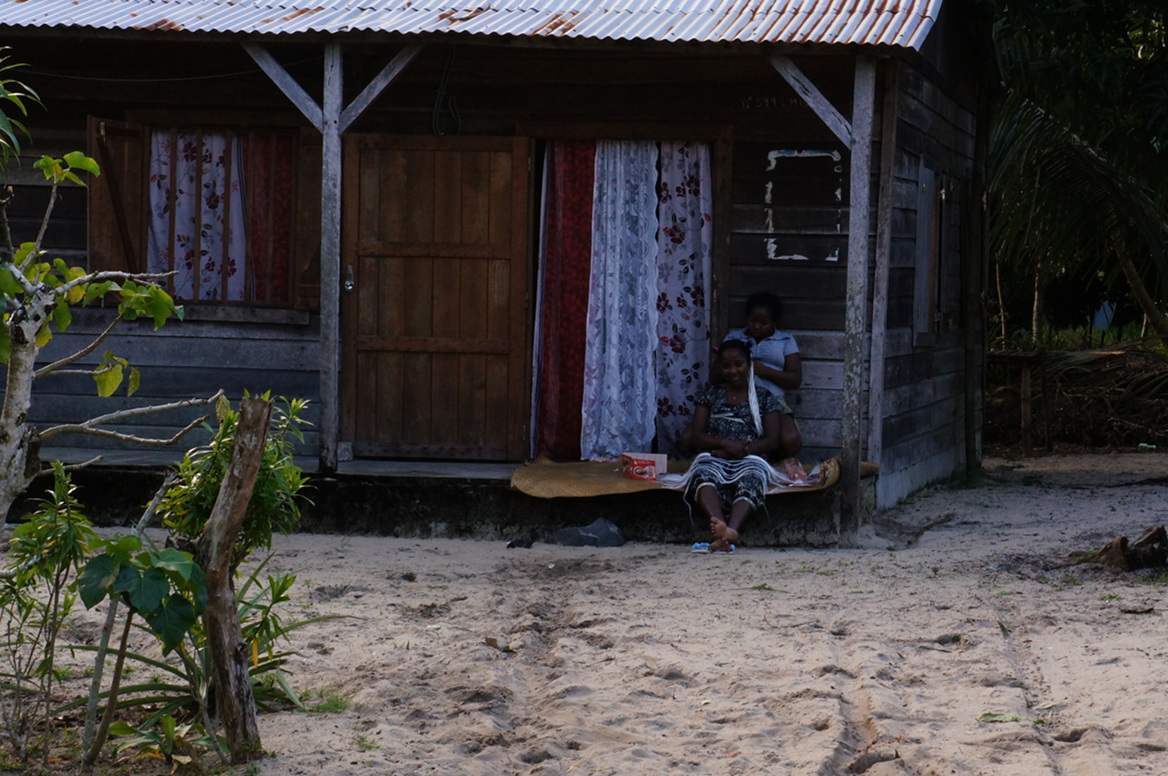
and a woman who appeared to be the mother of at least some of them getting her hair done.  This was an unusually nice place with a tin roof (most roofs are thatch) and a real door.

Maroantsetra - woman on steps of house


2 Comments

Maroantsetra is a one dirt road town built on a river, a bay and the sea. Essentially isolated by land – the roads are no longer passable – most of the trade is by sea. The boats from out of here regularly sink, taking the occupants.  The captains, I am told, are unreliable to a man, and will tell you they are sailing tomorrow when they in fact they might be sailing in 6 weeks.

Picture: These boats sometimes sink, sometimes it seems without even making it out of port.

Maroantsetra - boats in river

Maroantsetra stands at the top of the Masoala Peninsula, the wettest place in Madagascar (approximately 9 times wetter than London) and one of the most isolated.  This wetness and isolation make it make it one of Madagascar’s most ecologically diverse regions, both in terms of biology and human behavior.  It also means one’s underwear is constantly wet.

While now it mostly makes its living from fishing and the sea trade, in times past Maroantsetra and the adjacent Masoala Peninsula was one of the world’s major pirate enclaves, with some pirates having upwards of 50 wives. This caught my attention as I had not realized piracy was so profitable.  Even so, while the local women do have a certain charm, I would not want to marry 50 of them, no matter how much I enjoyed my piracy.

Of course it would be nice to have one’s office outside one’s door:

Maroantsetra - boat near home

The only ‘supermarket’ is a concrete shop with roughly 1/3 of its aisle space devoted to hard liquor, mostly local rums of varying degrees of toxicity, and names like Kazanova, Gard Hot and Nigrita.  It is opposite the river and in fact it is the kind of ‘supermarket’ you would expect in a (former) pirate enclave.

However I was later also told that the rums in the ‘supermarket’ were not drunk by the sailors, who in fact drink more downmarket (and more toxic) rums, but by the towns wealthier gangsters.  At first sight this does not seem like the kind of place (being one dirt road and all) that would merit let alone support rum drinking gangsters.  But I suppose where you have sea trade, you have gangsters.

The other sign of Maroantsetra’s trading origins is its Muslim traders.  They are distinctive, mostly with beards and round hats, and have shops selling goods mostly from India and now China.  It was these quiet gentlemen who while Europe was still wrestling with plague, starvation and grinding feudalism, brought mathematics and a gentler form of Islam to Africa and Asia, as far as Malaysia and Indonesia.  Of course, for all their culture and enlightenment, a quick visit to one of their shops will quickly teach you that they are not averse to the odd sharp business practice.

This very narrow bridge connects Maroantsetra with whatever little it is connected to, and sees constant traffic of people (you can see them through the bars) with baskets on their heads, people in their church best, kids in their first communion dress and legless beggars walking themselves across with their hands.

Maroantsetra - bridge life


2 Comments